

close
Choose Your Site
Global
Social Media

Views: 0 Author: Site Editor Publish Time: 2026-10-08 Origin: Site


Procurement teams often treat speaker brackets as basic commodity hardware. They assume any simple plastic ring will hold a door driver securely in place. This dangerous misconception frequently leads to downstream warranty claims, acoustic degradation, and severe installation delays. Poorly specified brackets introduce significant Noise, Vibration, and Harshness (NVH) issues directly into the vehicle cabin. Installers then face costly manual modifications on the assembly line just to make these cheap components fit properly.
You need a rigid evaluation framework to prevent these manufacturing bottlenecks. We will explore how to source a highly reliable OEM speaker bracket balancing unit cost efficiency, labor reduction, and acoustic integrity. You will learn exactly what engineering specifications to demand from your automotive suppliers to guarantee a flawless drop-in fit.
Manufacturing and procurement departments often fixate on the raw piece price of a bracket. They ignore the cascading financial impact of poor manufacturing tolerances. Substandard materials create hidden business costs across the entire production lifecycle.
Loose tolerances destroy installation efficiency. When a bracket fails to align perfectly perfectly over factory mounting holes, assembly line workers must intervene. They grab drills, utility knives, or snips to manually modify the plastic housing. This manual intervention stops the assembly line. Every minute spent shaving down a poorly designed plastic ring multiplies your baseline labor expenses. Drop-in fitment remains non-negotiable for high-volume production environments.
A direct correlation exists between flimsy bracket materials and low-frequency energy loss. A speaker driver moves rapidly to create sound waves. If the mounting bracket lacks structural rigidity, it flexes opposite to the speaker cone. This physical flexing absorbs the acoustic energy. The resulting acoustic failures manifest as severe door panel rattling and bass cancellation. You lose punchy mid-bass response because the cheap plastic cannot anchor the driver securely.
Cheap plastics degrade quickly inside extreme environments. Vehicle door cavities act like ovens during summer months and freezers during winter. Low-grade recycled plastics cannot survive these constant temperature swings. They become brittle and warp over time. This long-term degradation leads to speaker detachment or catastrophic hardware failure. Customers then return vehicles for warranty service, generating expensive Return Merchandise Authorization (RMA) claims. Preventing these warranty claims requires investing in thermally stable polymers upfront.
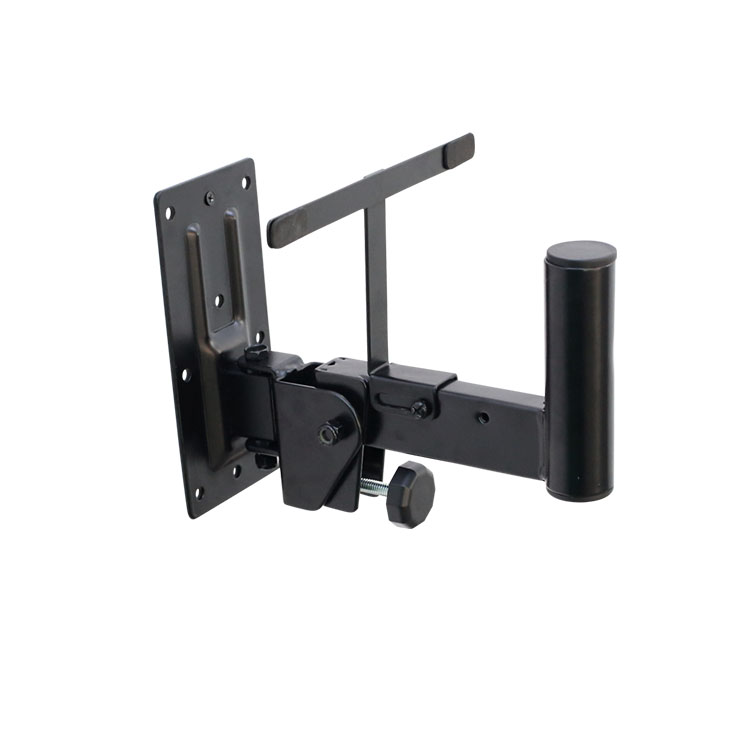
Sourcing a reliable OEM speaker mount requires looking beyond basic dimensions. Buyers must evaluate the foundational engineering of the component. We look for specific material science, acoustic decoupling, and secure fastening mechanisms.
You must evaluate high-density ABS, glass-filled nylon, or chemically treated MDF. Automotive door cavities trap intense moisture and experience rapid thermal cycling. Standard untreated plastics warp under load. High-density ABS provides excellent dimensional stability and resists moisture penetration. Glass-filled nylon takes rigidity a step further, offering superior tensile strength. It prevents the mounting flange from snapping when installers torque the mounting screws down.
Material Performance Comparison for Automotive Brackets
| Material Type | Thermal Stability | Acoustic Rigidity | Moisture Resistance |
|---|---|---|---|
| Low-Grade Polypropylene | Poor | Low | High |
| High-Density ABS | Excellent | Medium-High | Excellent |
| Glass-Filled Nylon | Superior | Very High | Excellent |
| Treated MDF | Moderate | Superior | Moderate |
A speaker bracket must do more than hold the driver. It must seal the acoustic chamber. You should demand integrated weather-stripping or dense EVA foam gaskets on your purchase orders. Metal-to-plastic and plastic-to-speaker interfaces require acoustic decoupling. If hard plastic mounts directly against bare sheet metal, the assembly will vibrate aggressively. An airtight foam seal eliminates micro-gaps, prevents air leaks, and guarantees maximum audio performance.
Mounting hardware specifications dictate long-term durability. Many budget suppliers use simple, self-tapping plastic holes. These holes strip out easily during fast-paced assembly. Premium brackets utilize brass threaded inserts instead. Brass inserts allow installers to tighten machine screws securely without stripping the housing. This creates a vibration-resistant mounting solution capable of surviving thousands of miles of rough road conditions.
Engineering teams must enforce strict dimensional tolerances before approving any supplier samples. A bracket might look correct on a CAD drawing but fail miserably during physical fitment testing.
Specifying exact maximum top-mount depths prevents disastrous mechanical collisions inside the door panel. Modern vehicles pack window regulator tracks, wiring harnesses, and crash sensors tightly together. If a bracket is too shallow, the speaker magnet will strike the descending window glass. Buyers must verify the Z-axis depth clearance down to the millimeter. You must guarantee the mounting spacer pushes the driver out just enough to clear internal obstructions while avoiding contact with the interior door card.
Avoid generic mounting solutions. Relying on "universal" multi-hole patterns often compromises structural integrity. Universal brackets feature dozens of slotted holes designed to fit various car models. This "swiss cheese" design removes critical material from the mounting flange. It weakens the overall structure and creates vibration nodes. Exact-match OEM designs feature dedicated, reinforced mounting tabs aligning perfectly with factory threaded holes.
High-power automotive speakers utilize massive motor structures. Ensuring the rear basket and magnet of specified 2-ohm or 4-ohm drivers have adequate breathing room within the bracket housing is essential.
Engineers must verify three critical clearance zones:
Establishing an internal baseline for acceptable quality helps procurement teams evaluate new vendor catalogs. Breaking down a specific, proven model reveals exactly what engineering traits matter most.
Analyzing the structural logic of the JYSP-120 bracket serves as an excellent baseline for acceptable OEM standards. This model utilizes internal ribbing to distribute heavy mechanical loads away from the primary mounting tabs. Engineers reinforce the circumference to prevent twisting when installers apply uneven torque. We see built-in wire routing channels keeping speaker cables safely away from sharp sheet metal edges. This structural framework reduces warranty liabilities significantly.
Buyers must identify which vehicle platforms and speaker chassis sizes align best with this specific hardware. The standard 6.5-inch speaker category contains wild variations. Some aftermarket brands produce oversized 6.75-inch baskets. Evaluating a standardized model means checking the inner cutout diameter against your specific driver inventory. You must map these application constraints early. Do not assume a standard 6.5-inch bracket will swallow a heavy-duty oversized driver.
Procurement teams face a common crossroad during product planning. You must decide when to utilize off-the-shelf standardized models versus investing heavily in custom injection tooling. Standardized models provide immediate scalability. They require zero tooling fees and ship quickly. Custom tooling makes sense only when launching a highly proprietary speaker line featuring non-standard basket dimensions. For most standard fleet upgrades, adapting a proven, rigid, off-the-shelf design accelerates time-to-market and drastically lowers upfront capital expenditure.
Finding a factory capable of injecting plastic is easy. Finding a reliable manufacturing partner capable of maintaining strict automotive tolerances across massive production runs requires intense vetting.
Every buyer must conduct a rigorous Return on Investment (ROI) analysis. Paying for custom molds offers total design control but requires steep upfront capital. Mold fabrication takes several weeks, delaying your launch schedule. Adapting existing supplier catalogs eliminates these tooling costs entirely. You trade proprietary design for speed and immediate cost savings. If the off-the-shelf catalog meets your acoustic sealing and rigidity requirements, it usually presents the most profitable path forward.
You must scrutinize a supplier's Quality Assurance (QA) documentation closely. Do not rely on verbal promises. Look for active ISO 9001 certifications. More importantly, seek out the automotive standard TS 16949. Suppliers holding TS 16949 certification understand the rigorous demands of vehicular environments. They implement statistical process controls to guarantee batch-to-batch consistency. A TS 16949 audited factory will not secretly swap your high-density ABS for cheap recycled plastics halfway through a production run.
Supply chain bottlenecks destroy project timelines. You must align supplier production capacity directly with your rolling forecast. Discuss Minimum Order Quantities (MOQ) before negotiating unit prices. A supplier offering incredible pricing but demanding a massive 50,000-unit MOQ might crush your cash flow. Similarly, clarify exact manufacturing lead times. Ensure the supplier possesses enough injection molding machines to scale up rapidly if your product demand suddenly spikes.
Sourcing the right OEM speaker bracket requires moving past unit-cost fixation to evaluate the total installed cost. You must account for assembly labor, warranty returns, and acoustic performance. Cheaping out on plastic housings will inevitably sabotage expensive speaker drivers and frustrate installation teams.
Your immediate next step is to build a standardized specification sheet. Detail your exact material grade requirements, acoustic sealing expectations, and dimensional tolerances. Distribute this comprehensive document before soliciting supplier RFQs. Holding vendors to this rigid framework guarantees you procure hardware capable of maximizing both assembly efficiency and audio fidelity.
A: High-density ABS or glass-reinforced nylon are the best materials. We recommend them due to their high thermal stability, exceptional moisture resistance, and acoustic rigidity. They survive extreme door cavity temperatures without warping.
A: Poor tolerances create micro-gaps between the speaker and the door panel. These gaps leak acoustic energy, causing front-to-rear wave cancellation. This leakage significantly reduces mid-bass response and ruins overall audio fidelity.
A: Yes. Pre-applied EVA foam gaskets reduce assembly line labor drastically. They guarantee a consistent, airtight seal between the bracket and the vehicle chassis, eliminating vibration noise and improving sound quality.
A: Costs vary widely based on mold complexity and cavity count. However, buyers must carefully weigh upfront tooling fees against the reduced labor costs of a perfect drop-in fit. Standardized off-the-shelf options often eliminate these fees entirely.
