

close
Choose Your Site
Global
Social Media

Views: 0 Author: Site Editor Publish Time: 2026-11-17 Origin: Site


Mounting a single audio device in a living room takes a few basic screws and a free afternoon. Deploying hundreds across a hospitality or corporate environment presents a massive logistical challenge. You cannot treat enterprise rollouts like residential weekend projects. In commercial AV, the cost of labor, ongoing maintenance, and hardware security often outweigh the initial unit price of the mounting hardware itself. You face tight project deadlines, strict building codes, and unpredictable guest behavior.
A failing bracket in a hotel room means lost revenue and immediate maintenance tickets. Selecting the right commercial soundbar mount requires careful evaluation. You must thoroughly assess tamper resistance, universal VESA compatibility, and installation efficiency. By prioritizing these specific factors, you protect project margins. You also ensure highly consistent guest experiences across every single room in your facility.
Direct-to-TV VESA soundbar mounts eliminate the need for additional wall drilling, significantly reducing per-room installation labor in hotels.
Theft deterrence and tamper-resistant hardware are non-negotiable for hospitality and public-facing AV deployments.
Standardizing on a universal speaker mount design allows procurement to reduce SKU variations, even if display and soundbar models change over time.
Evaluating cable management capabilities upfront prevents costly ongoing maintenance and protects against guest tampering.
Enterprise AV deployments face uniquely harsh conditions. Consumer-grade hardware consistently fails in these demanding commercial spaces. Hidden costs pile up rapidly when teams cut corners on mounting accessories. Flimsy residential brackets bend under heavy daily use. Unsecured devices invite theft from opportunistic guests. When you use varied consumer brackets, aesthetics look wildly inconsistent across different rooms. Your facilities team then struggles to maintain a unified standard.
Consider the brutal reality of labor scaling. Time dictates profit in commercial integration. An extra 15 minutes of installation time per room seems relatively minor at first glance. Multiply this delay across a standard 300-room hotel project. You just added 75 hours of expensive integration labor. Poorly designed hardware directly drains your project budget through sheer inefficiency.
Wall integrity presents another massive financial risk. Drilling into commercial partition walls carries severe structural liabilities. Installers risk striking hidden electrical conduit or pressurized plumbing lines. Inadvertent drilling might also violate strict commercial fire ratings. Repairing a punctured water pipe easily erases an entire project's profit margin. Display-attached solutions strategically bypass these drilling risks entirely. They keep the installation focused on the existing display footprint.
You must match the mounting hardware to the specific room environment. Different spaces require entirely different structural approaches. Commercial manufacturers provide three main solution categories to address these diverse deployment needs.
Direct-to-display VESA mounts offer tremendous flexibility. The bracket attaches directly to the TV's existing VESA pattern or rear wall mount. Installers love this method for articulating hospitality displays. When a guest rotates the television, the audio follows the screen direction perfectly. This setup keeps the audio focused directly on the listener.
Fixed wall mounts feature heavy-duty security enclosures. Manufacturers design these standalone brackets specifically for high-traffic public areas. You commonly see them in crowded sports bars, hotel lobbies, and airport lounges. They require separate wall anchoring. However, they offer absolute maximum theft deterrence against aggressive tampering.
Under-display depth-adjustable brackets solve critical spatial alignment issues. The bracket accommodates varying device depths to maintain a perfectly flush profile. This ensures your installation remains sleek and compliant in narrow corridors or tight meeting rooms.
Commercial Soundbar Mounting Solutions Comparison
Solution Category | Primary Use Case | Key Benefit | Installation Requirement |
|---|---|---|---|
Direct-to-Display (VESA) | Hotel guest rooms, articulating TVs | Audio follows screen direction | Uses existing TV VESA pattern |
Fixed Security Enclosure | Sports bars, open lobbies | Maximum theft deterrence | Requires separate wall anchoring |
Depth-Adjustable Bracket | Corridors, meeting rooms | Flush, ADA-compliant profile | Mounts under existing display |
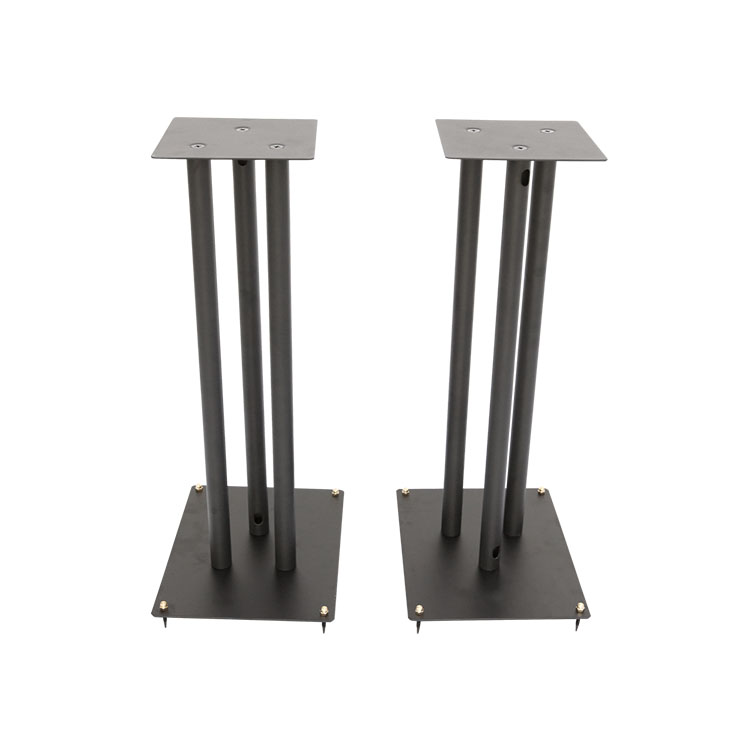
Enterprise procurement teams despise hardware fragmentation. You should always assess a bracket's adaptability to various industry VESA patterns. A quality unit seamlessly supports everything from 200x200 up to 600x400 configurations. It must also easily accept multiple audio brands. Displays and audio devices change frequently during typical five-year hardware refresh cycles.
Standardization yields massive operational benefits. Procurement teams can standardize on one specific speaker mount model across distinct properties or varied room types. Installers memorize the assembly steps instantly. You eliminate onsite confusion, reduce installer training time, and streamline future inventory management.
Public-facing hardware requires robust physical defense. Always look for specialized locking screws and proprietary Torx hardware. Many premium models feature discrete padlock-compatible brackets. Standard Phillips head screws practically invite curious guests to dismantle your expensive AV equipment using simple pocket tools.
However, you must balance security against operational reality. Security hardware prevents guests from removing devices or swapping HDMI cables. It must not aggressively obstruct routine IT maintenance. If your technicians need a grinder to replace a failed audio unit, the security measure is ultimately too restrictive.
Gravity constantly attacks cantilevered hardware. You must address the harsh mechanical reality of leveraged weight over time. Heavy commercial audio equipment exerts continuous downward force. Thin residential brackets slowly bend, resulting in visibly crooked installations.
Specify the absolute requirement for heavy-gauge steel construction. High-grade metal prevents the device from sagging or drooping under heavy commercial use. A perfectly level installation looks highly professional. Sagging hardware immediately makes a luxury hotel room feel cheap and poorly maintained.
Physical deployment carries numerous hidden traps. Careful planning mitigates these risks before installers hit the job site. You must address compliance, cabling, and structural testing early in the project lifecycle.
ADA compliance remains a strict legal requirement in commercial spaces. You must ensure the combined depth of the TV, the bracket, and the audio unit does not protrude excessively. Federal regulations strictly limit protrusion in public walkways or hotel corridors. Installations usually cannot protrude more than four inches from the wall surface. Fines for ADA violations easily cripple project budgets.
Cable management significantly impacts long-term reliability. Review exactly how the hardware routes internal power cables and optical connections. Exposed cables look incredibly sloppy. They also invite active tampering from guests. Housekeeping staff commonly snag dangling cables while dusting. Proper strain relief locks cables firmly into place, preventing accidental unplugging and unnecessary service calls.
Bulk deployments require rigorous upfront validation. We strongly recommend executing a physical mock-up room before issuing any bulk purchase orders. Follow this basic validation sequence to ensure total rollout success:
Assemble the hardware: Build the complete display and audio pairing using the proposed bracket.
Time the installation: Clock the exact minutes required for a single technician to complete the mounting process.
Test structural integrity: Apply moderate physical pressure to verify sag resistance and overall stability.
Review cable routing: Confirm cables remain completely hidden from normal viewing angles.
Check maintenance access: Ensure technicians can still reach the display's rear input ports easily.
Selecting the final vendor requires analytical discipline. Your decision framework must balance upfront hardware costs against projected installation time. Cheap brackets take twice as long to install. The additional labor instantly destroys any initial unit savings. You must also consider the typical five-year commercial replacement cycle. Durable brackets often outlast the electronic devices they hold.
Vendor capabilities matter just as much as the physical product. Shortlist integration partners offering specific commercial benefits. Look for these essential vendor requirements when evaluating potential hardware suppliers:
Comprehensive commercial warranties covering structural failure.
Bulk packaging options to drastically reduce on-site cardboard waste disposal.
Dedicated integration support for complex technical questions.
Custom tooling options for unique proprietary security screws.
Consistent inventory availability to prevent project delays.
Take immediate, actionable steps to secure your rollout. Do not rely solely on digital spec sheets or marketing brochures. Request a physical evaluation sample from your top shortlisted vendors. Test this sample against your specific display pairing in a highly controlled environment. Hands-on testing definitively exposes flimsy construction or frustrating assembly procedures before you commit your budget.
Enterprise AV deployments demand robust, scalable hardware solutions. The right mounting infrastructure directly mitigates labor bloat across large-scale projects. It actively secures expensive AV assets against theft and daily abuse. Furthermore, standardizing your fleet deployments simplifies long-term maintenance for your entire IT team.
Integrators and IT directors must shift their perspective on physical hardware. You should never treat mounting brackets as an afterthought accessory. They serve as a critical, foundational component of your AV infrastructure scaling strategy. Invest in heavy-gauge, secure, and universally compatible mounting solutions today. You will protect your project margins and ensure flawless operational reliability for years to come.
A: Yes, provided the gauge of the steel is true commercial-grade. The television's own rear wall mount must also be specifically rated for the combined weight of the display and the speaker. Always verify maximum load capacities for all connected hardware before beginning deployment.
A: Utilize mounts featuring tamper-resistant Torx screws and Kensington lock compatibility. Bypassing standard Phillips head hardware prevents guests from easily detaching the equipment using basic pocket tools. This simple hardware upgrade significantly reduces opportunistic hardware theft.
A: No, as long as they utilize the manufacturer's approved rear VESA mounting points. You must also carefully ensure the combined setup does not exceed the display chassis weight limits specified by the original equipment manufacturer.
A: It reduces installer training time and minimizes packaging waste during large deployments. Standardization also allows for lucrative bulk purchasing discounts. Furthermore, it vastly simplifies future maintenance across different properties by keeping replacement parts completely uniform.
